
Catering Proposals That Win More Events: 9 Ways to Close More Catering Clients
A catering proposal is more than a quote. It is one of the most important sales tools your business has.
Many caterers spend hours perfecting menus, calculating food costs, and building event packages—only to lose the booking after sending the proposal. The client goes silent, requests multiple revisions, or chooses a competitor.
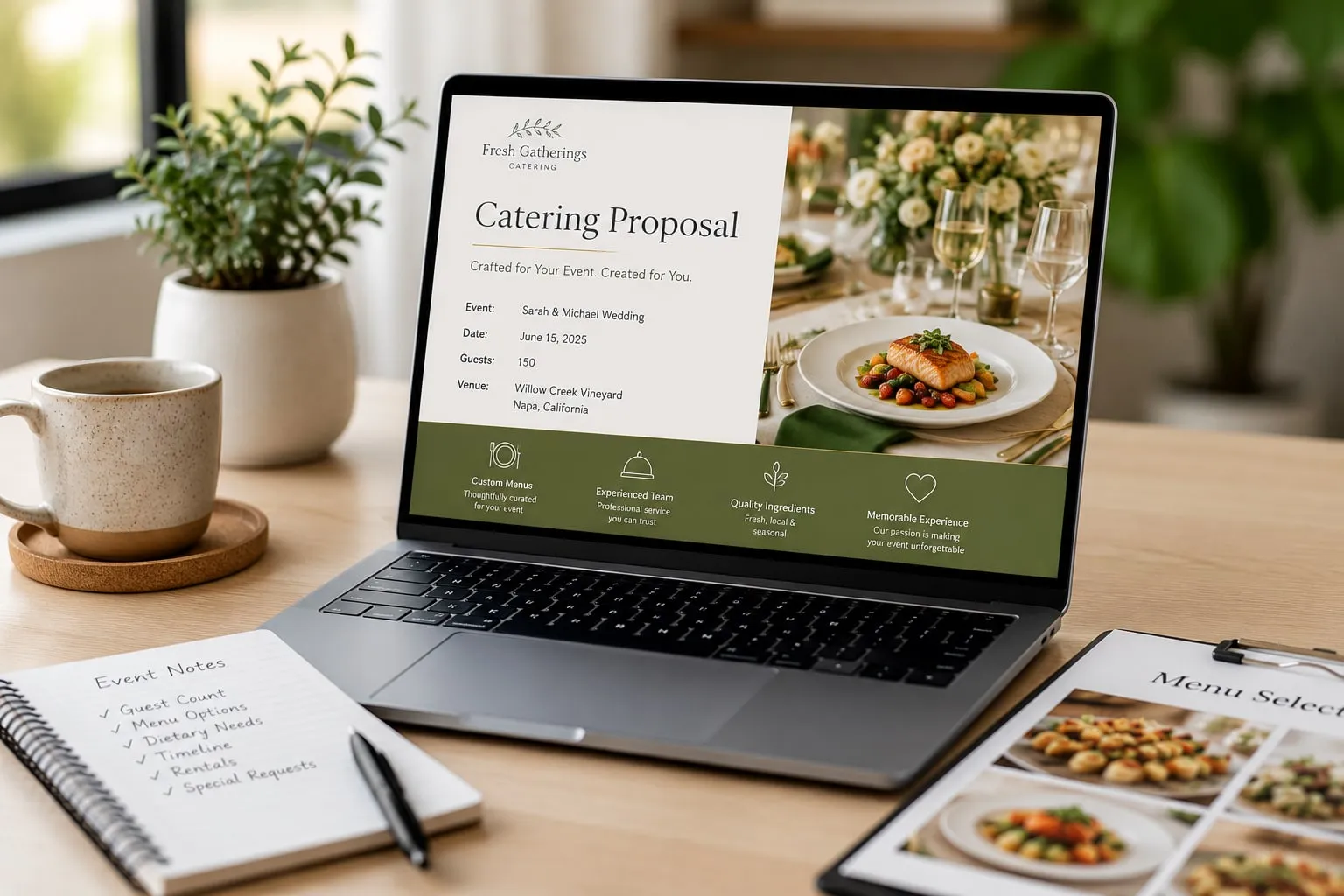
Often, the problem is not pricing. The problem is the proposal itself.
A great catering proposal creates confidence. It shows clients that you understand their event, have a clear plan, and can execute professionally. A weak proposal creates uncertainty, confusion, and hesitation.
The best catering proposals help clients make a decision quickly.
Here are nine proven ways to create catering proposals that win more events and help your business book more profitable clients.
1. Personalize the Proposal Immediately
One of the biggest mistakes caterers make is sending generic proposals.
Clients want to feel understood. Before discussing food or pricing, show that you listened during the consultation.
Include:
- Event type
- Event date
- Venue
- Guest count
- Service style
- Special requests
- Dietary considerations
- Event goals
Instead of sending a proposal that looks identical for every client, create a brief event summary that reflects their specific vision.
“We are excited to provide catering for your outdoor garden wedding at Willow Creek Vineyard on June 12th for approximately 150 guests featuring cocktail hour stations and family-style dinner service.”
That single paragraph instantly feels more personal than a standard template.
2. Stop Giving Clients Too Many Menu Choices
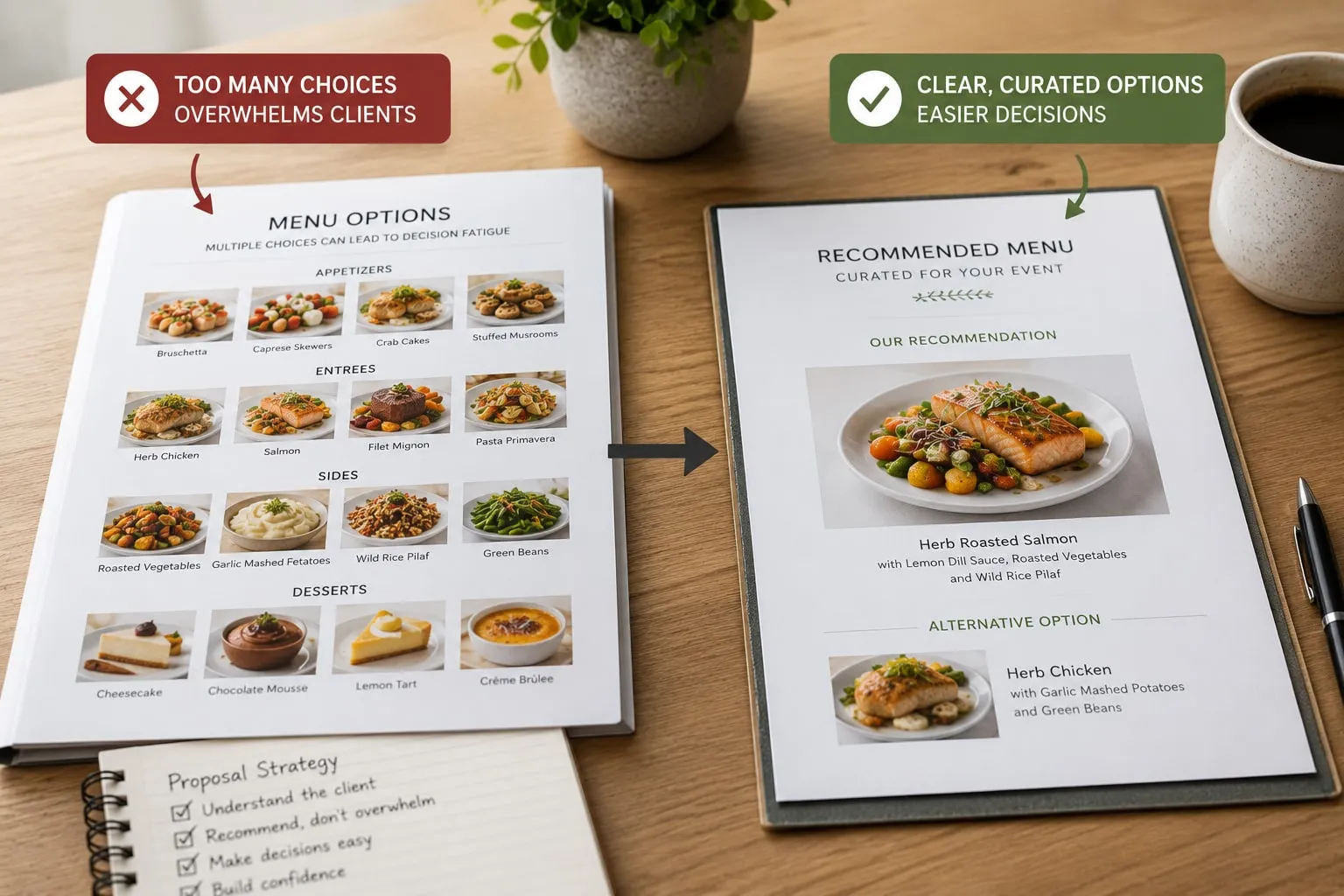
Many caterers believe more options increase their chances of winning. The opposite is often true.
When clients receive four menu packages, twelve entrée options, six appetizer combinations, and multiple service formats, they become overwhelmed.
Decision fatigue slows down bookings.
Instead:
- Recommend one primary menu
- Offer one alternative option
- Explain why each menu fits the event
Clients hire caterers because they want expertise. They do not want to build their own event menu from scratch.
Guiding the decision often closes more sales than offering unlimited choices.
3. Make Pricing Easy to Understand
Nothing kills momentum faster than confusing pricing.
Clients should never have to hunt through multiple pages to understand what the event will cost.
Example
Premium Garden Wedding Package
- Cocktail Hour
- Family-Style Dinner
- Dessert Display
- Non-Alcoholic Beverage Station
- Staffing
- Standard Rentals
$98 per guest
Then clearly list:
- Service charge
- Tax
- Optional upgrades
Transparent pricing reduces objections and builds trust.
4. Show the Event Experience, Not Just the Menu
Most proposals focus entirely on food. Clients care about food, but they also care about execution.
They want confidence that the event will run smoothly.
Include details such as:
- Setup timeline
- Staffing plan
- Service flow
- Cleanup process
- Guest experience highlights
Help clients visualize the event. The more real the event feels, the easier it becomes to say yes.
5. Use Photos Strategically
People buy visually. High-quality photos can dramatically improve proposal conversion rates.
Include:
- Similar event setups
- Buffet displays
- Food stations
- Beverage stations
- Outdoor events
- Wedding receptions
- Corporate catering examples
Avoid stock photos that look generic. Use real event photography whenever possible.
The goal is to help the client picture their event with your company.
6. Reduce Proposal Response Time
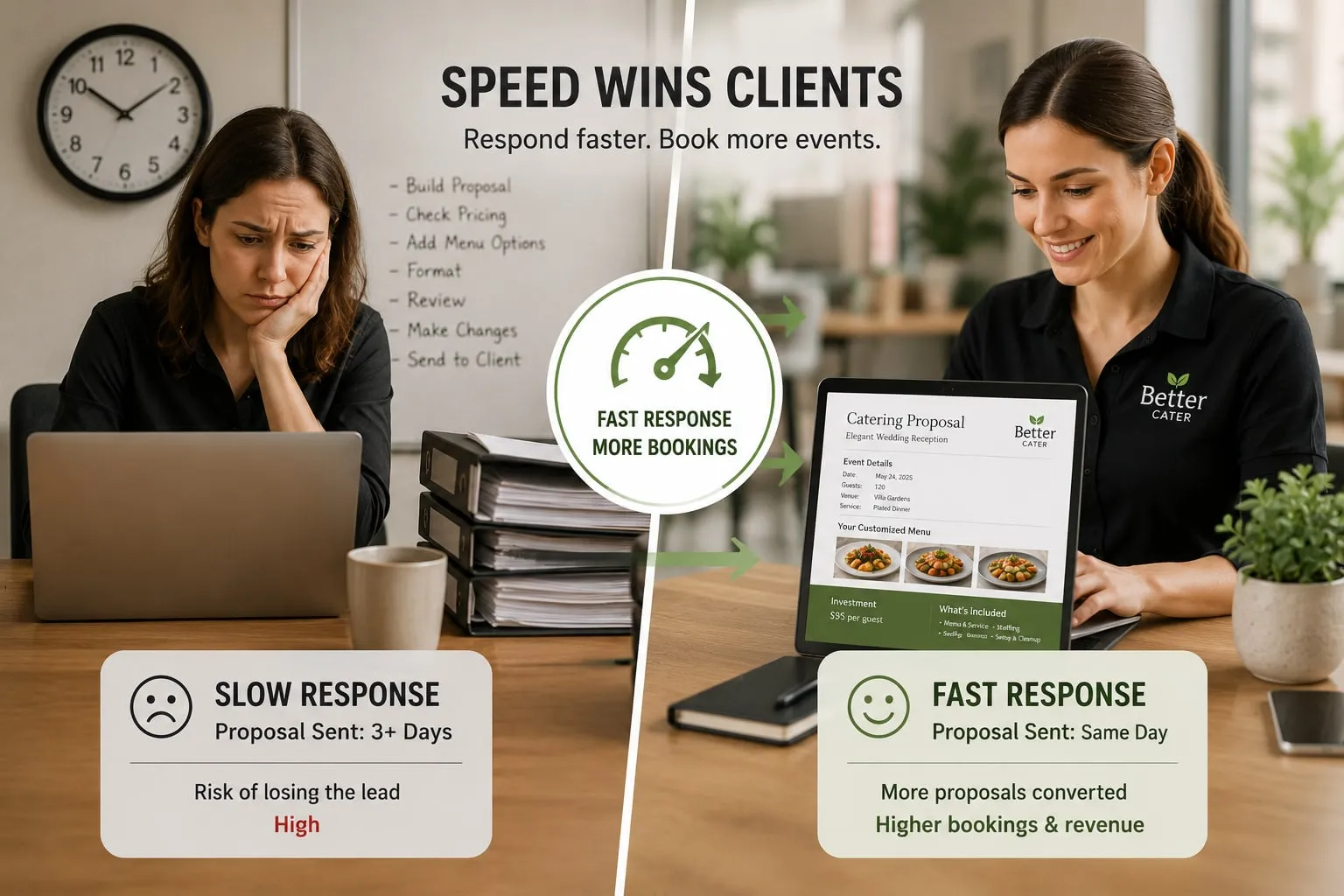
One of the most overlooked sales advantages is speed.
Many catering businesses lose events simply because they take too long to send proposals.
A lead contacts three caterers. The first caterer sends a polished proposal within hours. The second responds three days later. The third takes a week.
Who usually wins? Often, the first.
Fast response times create momentum and show professionalism.
Using catering software allows teams to:
- Reuse proposal templates
- Pull menu pricing automatically
- Generate event packages quickly
- Send digital proposals faster
The faster you respond, the more likely you are to stay at the top of the client’s consideration list.
7. Make It Easy to Approve
Many proposals create unnecessary friction.
Clients should not need to:
- Print documents
- Scan signatures
- Email PDFs back and forth
- Request multiple revisions
The booking process should feel simple.
The best proposal systems allow clients to:
- Review proposals online
- Approve digitally
- Pay deposits immediately
- Confirm details quickly
Every extra step creates an opportunity for hesitation. Removing friction increases conversions.
8. Include Strategic Upsells
A proposal should not only win the booking. It should maximize revenue.
Thoughtful upsells can increase event value without creating pressure.
Popular catering upsells include:
- Beverage stations
- Signature mocktails
- Coffee bars
- Late-night snacks
- Dessert stations
- Additional staffing
- Upgraded rentals
- Premium linens
- Enhanced presentation displays
The key is relevance. Suggest upgrades that improve the event experience rather than appearing as unnecessary add-ons.
9. Follow Up Consistently
Many caterers send a proposal and wait. Then they wait longer. Then they assume the client is not interested.
That approach loses bookings.
Clients are busy. Events involve multiple decision makers. Following up professionally is part of the sales process.
Simple Follow-Up Schedule
- Day 1: Proposal delivered.
- Day 3: Check-in email.
- Day 7: Follow-up call or email.
- Day 10: Final follow-up with availability reminder.
Professional follow-up demonstrates reliability without appearing aggressive. Many catering contracts are won during follow-up—not during the initial proposal.
How Catering Software Helps You Close More Events
As catering companies grow, proposal management becomes harder.
More leads create:
- More revisions
- More pricing requests
- More event details
- More opportunities for mistakes
Manual proposal systems often lead to:
- Slow response times
- Pricing inconsistencies
- Missing information
- Lost opportunities
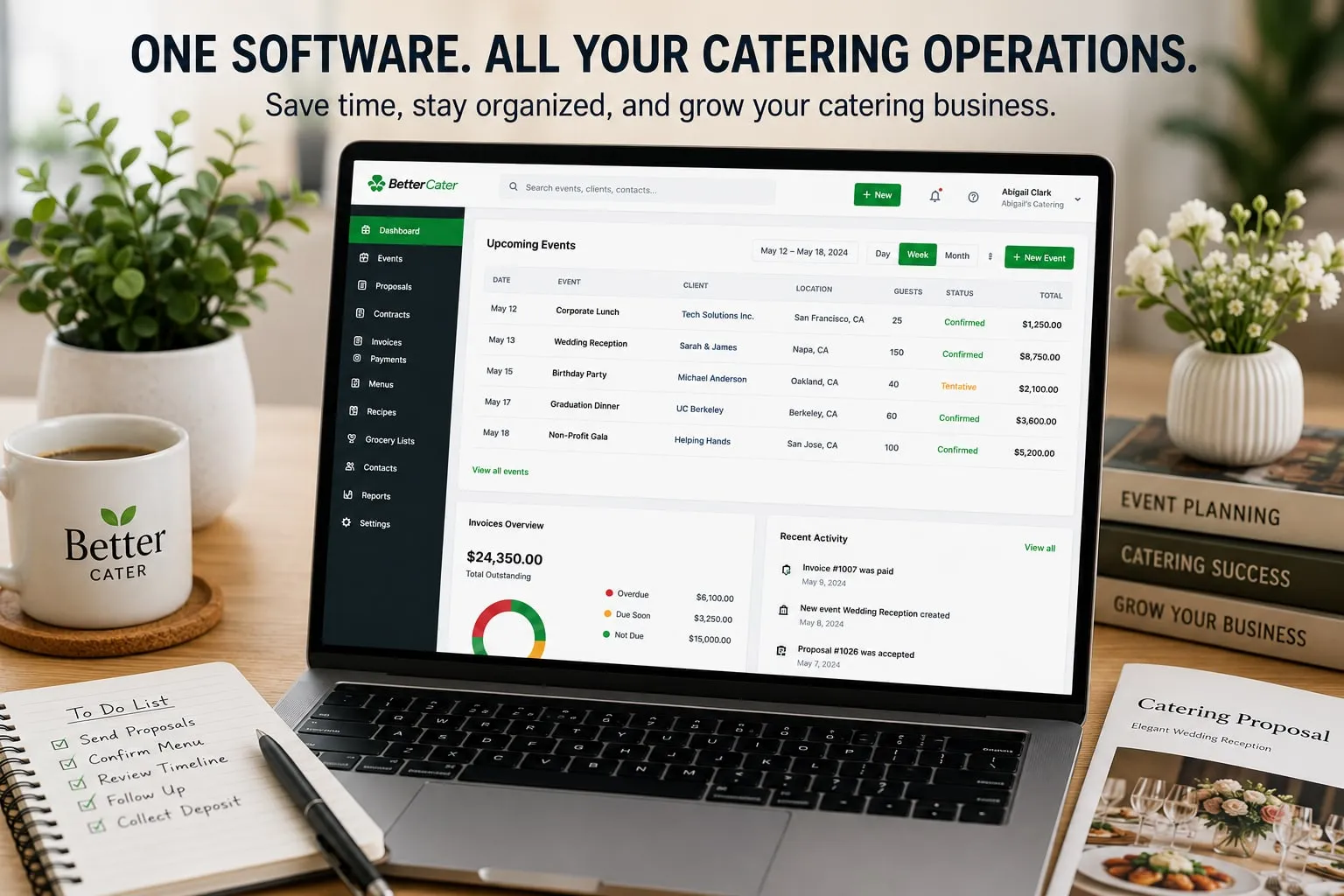
Modern catering software helps businesses:
- Create professional proposals quickly
- Standardize pricing
- Store menu packages
- Track proposal status
- Manage client communication
- Collect deposits
- Convert leads faster
When proposals become easier to create and manage, sales teams can spend more time closing business instead of formatting documents.
For more ways to streamline your sales process, read Catering Client Communication: 5 Templates That Save Time and Master High-Volume Catering with Smart Systems.
Final Thoughts
Winning catering proposals are not about adding more pages. They are about creating clarity.
The best proposals:
- Show that you understand the client
- Present a clear recommendation
- Make pricing transparent
- Demonstrate professionalism
- Remove decision-making friction
- Simplify approval
When clients feel confident, informed, and excited about their event, bookings happen faster.
By combining strong proposal strategy with efficient catering software, caterers can increase close rates, improve client experience, and book more profitable events.
Better Cater helps catering businesses manage proposals, events, menus, invoices, reports, and client communication in one easy-to-use platform.
Author Bio
Steve Franco writes about catering operations, sales systems, proposal strategy, and catering software. Through Better Cater, he helps catering businesses improve organization, increase efficiency, and grow revenue through smarter event management tools.